Susan Loriman’s concealed rape trauma
Hold TightSusan Loriman’s concealed rape trauma is a long-buried wound that governs what she can tell her family, how she experiences her marriage, and what she believes about Lucas Loriman’s parentage. The assault occurred years before she disclosed it to Ilene Goldfarb; by then, Susan had built a life around protecting Dante Loriman and their children from a truth she feared would alter her family irreparably. Her eventual confession does not bring a simple resolution: the man who assaulted her is dead, and the secret has already become part of the family’s history.
The Assault and Its Immediate Aftermath
Susan’s account begins on a night out with three girlfriends at a bar in West Orange. Dante had gone to Las Vegas, and Susan, married but describing the marriage as mostly happy, wanted a night of flirting and drinking with her single friends. She drank far too much. As the evening continued, her friends left with men one by one, and her memory of what followed became fragmentary. She remembered being in a man’s car, wanting to leave, and being taken to a motel against her will. There, he assaulted her. Susan later wondered whether a drug had contributed to her confusion and gaps in memory, but the account does not establish that she had been drugged.
During the attack, Susan feared she might die. She eventually acted when the man’s attention shifted: she freed a hand, fought back, and got hold of the knife he had used to threaten her. When he was no longer able to continue the assault, she could have left the room and sought help. Instead, she killed him with the knife. The account presents this as a consequential choice made in the immediate aftermath of terror, not as the start of a public investigation or a disclosure to her family.
Susan did not report what had happened. She waited for the police to contact her, but they never did. News reports identified the dead man, and police suspected that he had died in a robbery or a drug deal gone wrong; he had a criminal record. The brief appearance of his death in the papers did not lead to anyone discovering Susan’s role or the circumstances that had brought her to the motel. With the attacker dead and no police inquiry reaching her, she kept the secret.
Silence, Marriage, and Family
Susan’s mother had urged her to endure the assault in silence, arguing that disclosure would change how Dante saw her and could damage the family. Susan followed that counsel. When Dante came home, she resumed married life, though intimacy no longer felt as it had before. She loved him and wanted him happy, but the change persisted. Dante noticed that she had become more sullen, yet did not press her to explain. Susan returned to church, and, with time, she sometimes went whole days without thinking about the night. The assault nevertheless remained present in her changed response to sex and in the discomfort she felt when men admired her.
The secret also shapes Susan’s understanding of Lucas’s paternity. After the assault, she deliberately slept with Dante as often as possible. When Lucas was born, she believed Dante was his father: the assault had happened once, while she and Dante had been together many times that month. Lucas looked like Susan rather than either man, which helped her push the doubt away. Yet she had not truly forgotten the possibility that the rapist might have been Lucas’s biological father. The uncertainty persists beneath her outward assurance that Dante is Lucas’s true father, turning the concealed assault into a question about kinship as well as memory.
Disclosure to Ilene and the Limits of Help
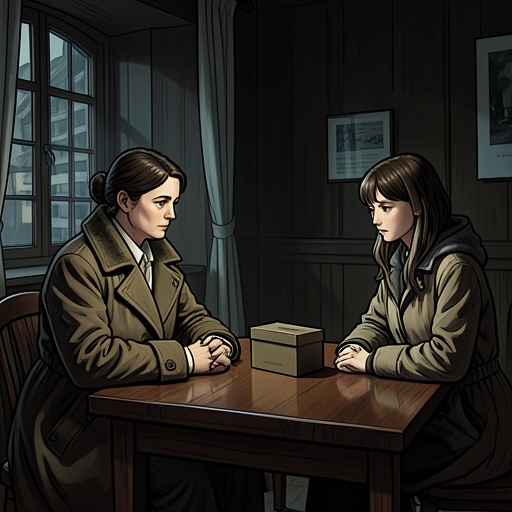
Years later, Susan tells Ilene Goldfarb that she was raped. The disclosure interrupts Ilene’s assumption that she is investigating a history of multiple lovers: Susan denies having had any lover and names the assault instead. Ilene’s response is to urge her to go to the police. Susan asks Ilene to let the matter go, and Ilene then asks whether Susan knows her attacker. That question points toward the practical obstacle Susan has not yet explained: there is no living assailant to question or bring to the police.
Susan does not tell Ilene that the attacker is dead. The revelation emerges through the account of that earlier night, clarifying why she cannot use the route Ilene proposes. Her silence is therefore not simply a refusal to speak about the assault. It protects a second secret—the killing—and reflects how thoroughly the past has been folded into the life she built afterward. The person she confides in receives the truth of the rape, but not the whole history behind it.
Narrative Significance
The story withholds the full account until after Susan’s brief disclosure, then returns to the assault and its aftermath in detail. This delayed telling makes the gap between what Susan can initially say and what the reader later learns part of the subject itself. Her disclosure to Ilene marks a moment of testimony, but not a completed confession: it opens the past without immediately resolving the secrecy surrounding the attacker’s death or Lucas’s parentage.
Susan’s decision to protect her family has a lasting cost. It allows her to continue her marriage and raise her children without revealing the assault, but it also leaves her to carry its effects alone and to manage an unresolved doubt about Lucas. The narrative places her mother’s advice, her own choices, and the absence of police contact alongside one another, showing how silence takes shape through both personal fear and circumstance. Susan’s trauma is concealed, not erased; it returns in the boundaries of what she can tell Ilene, in her altered intimacy with Dante, and in the uncertainty she has never fully put aside.